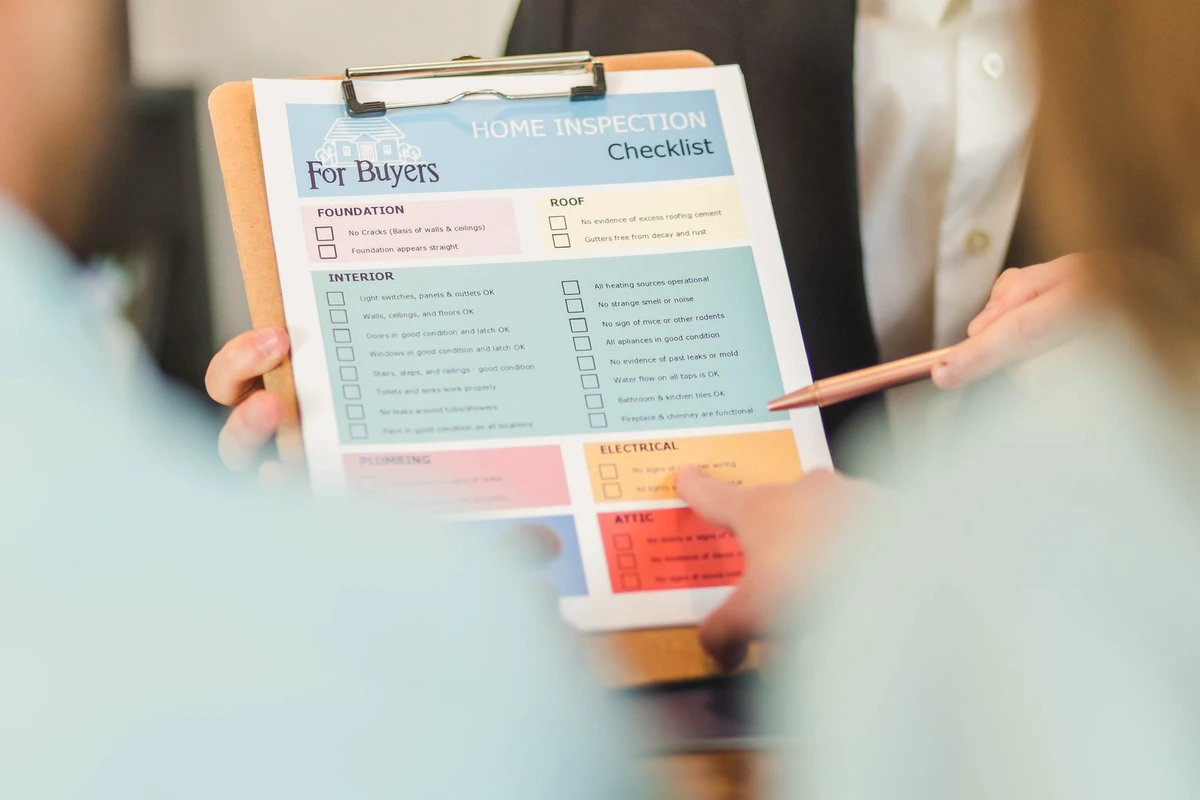
A sewer scope inspection films the inside of a home's sewer line from the house to the public main and shows roots, sags, offset joints, cracks, buildup or collapsed sections before you buy. It matters most in Gilbert's older homes, since about 38% of the town's housing was built before 2000 (U.S. Census Bureau, 2024). The buyer owns that line, including the tap, from closing day. A scope costs $150 to $400 in most homes and gives you the evidence to ask for a repair, a credit or a lower price. Homes on septic in the county islands need a separate state-required septic inspection before the sale.
How a Camera Inspection of the Sewer Line Works
To scope a sewer line, an inspector feeds a waterproof camera on a flexible cable through a cleanout or a pulled toilet and records the pipe from the house to its connection at the public main. The camera head carries its own light, and a monitor at the surface shows the pipe wall as the cable moves.
The inspector records the video and notes the distance to every problem, so a plumber can find the spot later.
Where does the camera go into the line?
The camera goes in through a cleanout, a capped pipe that opens straight into the sewer line. Many homes have one outdoors. Without a usable cleanout, the inspector pulls a toilet and enters through its drain, or works down from a roof vent.
How long does the camera inspection take?
A camera inspection takes under an hour in most homes, including setup. Long lines, several bends or heavy buildup stretch that time.
The 6 Problems a Sewer Scope Finds
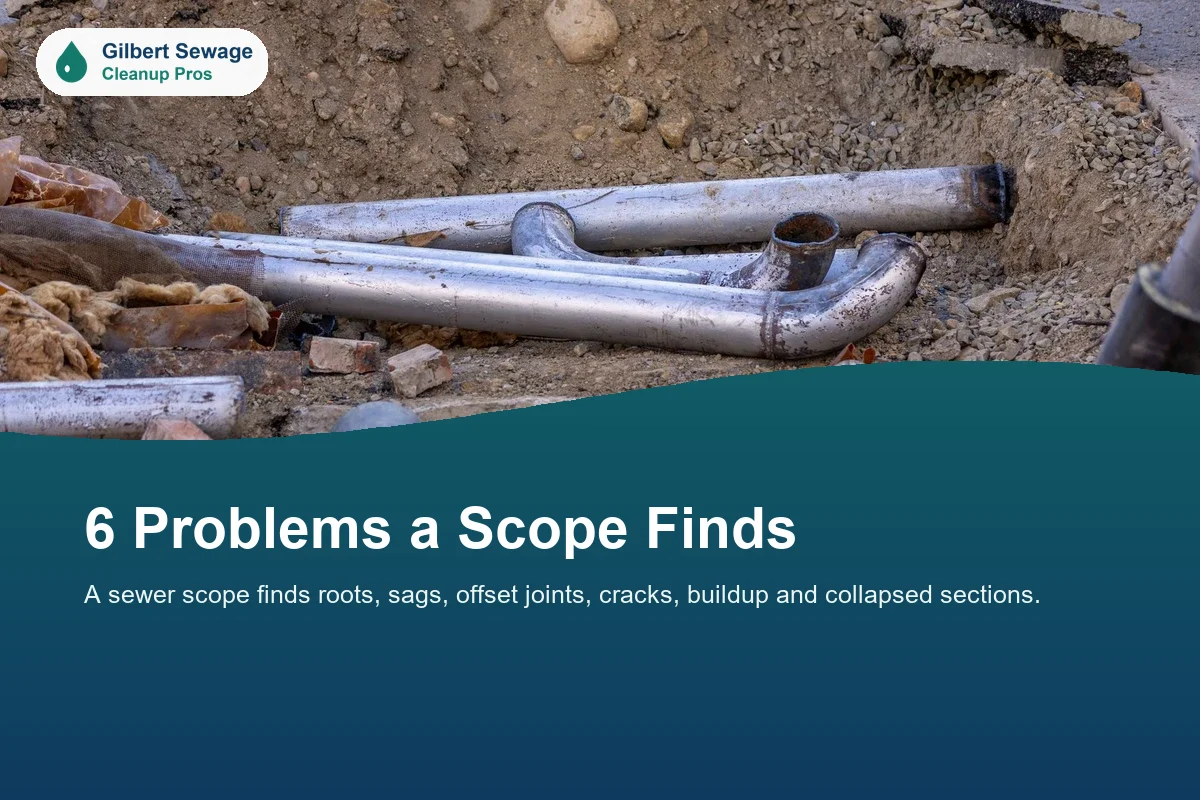
The 6 problems a sewer scope finds are root intrusion, bellies (sagging sections), offset or separated joints, cracks and breaks, grease and scale buildup, and crushed or collapsed sections. Each one looks different on camera and carries a different weight in a sale.
| Problem | What it looks like on camera | What it means for a buyer |
|---|---|---|
| Root intrusion | Fine or thick roots entering at a joint | Roots grow back after cutting, so the joint needs a repair or regular clearing |
| Belly (sag) | Standing water the camera dips into along a low section | Waste settles in the low spot and causes repeat clogs |
| Offset or separated joint | A step or gap where two pipe sections meet | Waste catches on the edge, and the gap lets roots and soil in |
| Crack or break | A line or hole in the pipe wall | Sewage leaks into the soil, and the damage can grow into a collapse |
| Grease and scale buildup | A rough coating that narrows the pipe | Cleaning clears it, and it points to drain habits more than pipe failure |
| Crushed or collapsed section | A pipe that has lost its shape or blocks the camera | The section needs replacement before the line can be relied on |
One finding changes the negotiation more often than the decision to buy.
Do Older Gilbert Homes Need a Sewer Scope?
Yes, homes built before 2000, about 38% of Gilbert's housing, are the strongest case for a scope, because their sewer lines are now more than 25 years old (U.S. Census Bureau, 2024). Another 32% of homes were built from 2000 to 2009, which puts about 70% of the town's housing past 15 years. Our breakdown of the age of homes in Gilbert by neighborhood shows where the older homes sit.

Age alone does not mean a line has failed, but it gives roots and settling soil decades to act on the pipe. Plastic pipe resists rust but still cracks, separates at joints and sags when the soil under it settles, while older cast iron and clay pipe add corrosion and root-prone joints.
Which neighborhoods have the oldest sewer lines?
Three Gilbert neighborhoods with homes from the 1980s or earlier are Val Vista Lakes, The Islands and the Heritage District.
- Val Vista Lakes, built from 1985, often cited as Gilbert's first lake subdivision
- The Islands, with most homes built in the late 1980s and early 1990s
- The Heritage District, the original town core, where the earliest homestead dates to 1891
A scope on a home in any of them shows how the original line has held up.
Is a scope worth it on a home built after 2010?
Yes, a scope on a newer home still finds problems, such as construction debris left in the line, sags from settling soil or a damaged connection. The odds of a finding are lower, but the fee is the same.
Who Owns the Sewer Line You Are Buying?
The buyer of a Gilbert home owns the individual sewer line from the house to its connection at the town main, including the sewer tap (Town of Gilbert Code, Chapter 66). The code requires users to clean, unstop and maintain that line and to remove root intrusions along its whole length (Town of Gilbert Code, Sec. 66-251).
Every problem on the scope video becomes the buyer's problem on closing day. The guide to who is responsible for a sewage backup explains where the owner's line ends and the public main begins.
How Much Does a Sewer Scope Cost?
A sewer scope runs $150 to $400 in most homes, and less when it is booked together with the general home inspection. The 4 factors that move the price are:
- Access point, since an outdoor cleanout is faster than pulling a toilet
- Line length, from a short run on a small lot to a long run on a large one
- Report type, either the video alone or the video plus a written report
- Booking, either as a standalone visit or as an add-on to the home inspection
The scope is one of the smallest bills in a home purchase.
What to Do When the Scope Finds a Problem
To act on a scope finding, you send the video and report to your agent before the inspection period ends and ask the seller for a repair, a credit or a lower price. The 4 steps after a finding are:
- Send the video, report and distances to your agent the same day.
- Get a written repair estimate from a licensed plumber, priced from the video.
- Ask the seller in writing, inside the inspection period, for a repair, a credit or a lower price.
- Confirm any seller repair with a receipt and a second scope before closing.
Should the seller repair the line or give a credit?
The key difference between a seller repair and a credit is who controls the work. A repair is finished before closing, but the seller picks the contractor and the method. A credit lets you choose the plumber and the fix, at the cost of doing the work as the new owner.
Buying a Home on Septic Instead of Town Sewer
Some homes in the unincorporated county islands inside Gilbert run on septic, and Arizona requires the seller to have the septic system inspected within six months before the sale (Arizona Department of Environmental Quality, Rule R18-9-A316). After closing, the buyer files a Notice of Transfer within 15 calendar days, with a $60 fee (Maricopa County Environmental Services).
The rule takes precedence over any conflicting terms in the purchase contract. A sewer scope does not replace this inspection, because the septic inspection covers the tank and the disposal field, which the camera never reaches. Backups from these systems need their own approach, covered under septic backup cleanup.
When the Line Has Already Backed Up Into the Home
A scope that shows a line has already backed up into the home points to cleanup work as well as a pipe repair. Sewage that reached floors or walls leaves contamination that the plumber's fix does not remove. Sewage cleanup in Gilbert covers that part of the job, from extraction to drying.
Signs a Home Has Had a Sewage Backup Before
The 5 signs a home has had a sewage backup are staining around floor drains, new flooring in one room only, cut drywall along the bottom of a wall, a recurring sewage odor and recent drain-cleaning or cleanup receipts.
- Staining or residue around floor drains, toilets and tub drains
- New flooring in one room while the rest of the house is original
- Cut or patched drywall along the bottom of a wall
- A recurring odor, such as a sewage smell that keeps coming back after the house is aired out
- Receipts for drain cleaning, plumbing or cleanup in the seller's records
Ask the seller in writing about past backups and repairs.
Frequently Asked Questions About Sewer Scopes
Is a sewer scope part of a standard home inspection?
No, a sewer scope is a separate add-on that the buyer orders alongside the general home inspection. Many home inspectors offer it, and plumbers run it as a standalone service.
Can a sewer scope see the town's main line?
No, a scope covers the private line up to its connection at the main, which is the part the buyer will own. The camera shows the connection itself, which Gilbert's code also assigns to the owner.
Does a sewer scope disturb the people living in the house?
No, the occupants only pause water use while the camera is in the line. Without an outdoor cleanout, the inspector pulls and resets one toilet.
Who pays for a sewer scope, the buyer or the seller?
The buyer orders and pays for the scope in most sales, as part of the inspection period.
Can a seller scope the line before listing?
Yes, a pre-listing scope lets a seller fix or disclose a problem before a buyer's inspector finds it.