The causes of sewer backups are blockages, broken pipes, pump failures and storm water overloading the lines, and blockages lead the list. Blockages caused 40.1% of the sanitary sewer overflows utilities reported to the EPA electronically and 46.2% of Arizona's, with grease alone behind 21.6% of Arizona's overflows. The EPA estimates 23,000 to 75,000 sanitary sewer overflows each year in the U.S., and flushed wipes add about $441 million a year to sewer utilities' operating costs. In Gilbert, the property owner clears a blockage anywhere in the line from the house to the main.
What Do Sewer Utilities Report as the Cause?
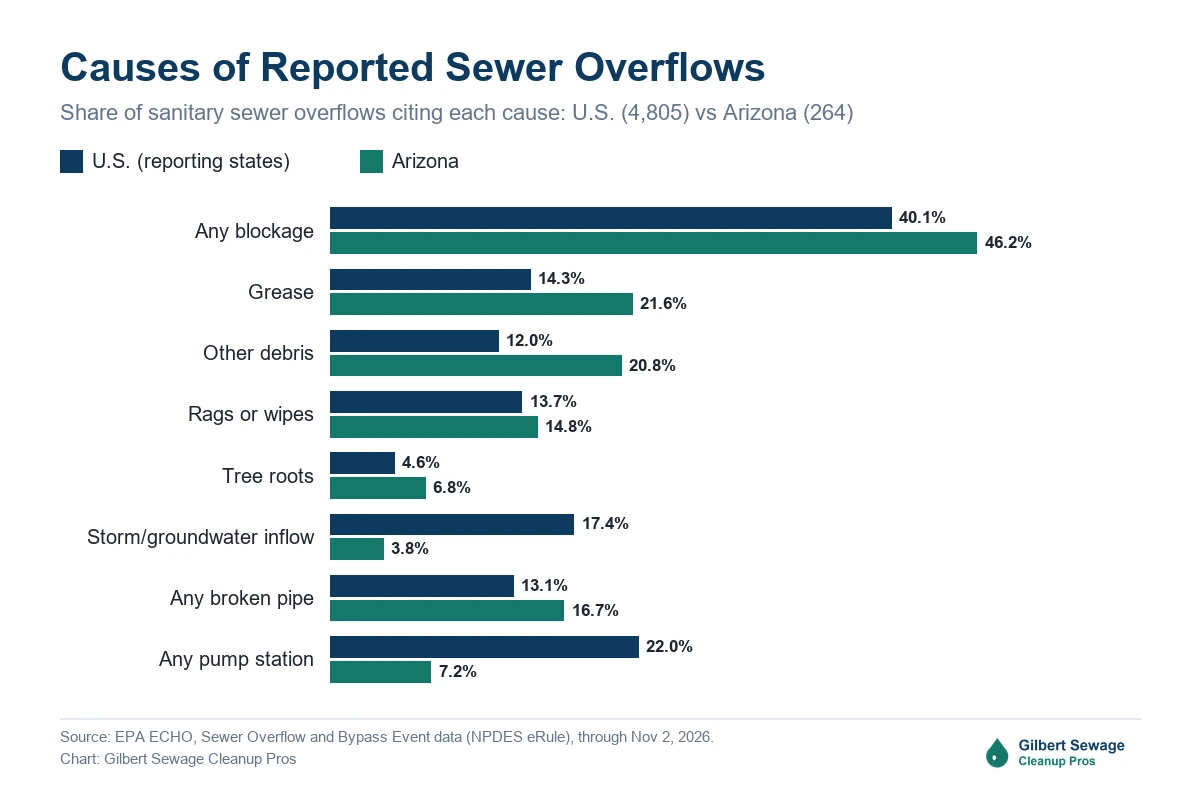
Blockages caused 40.1% of the 4,805 sanitary sewer overflows that utilities reported to the EPA electronically, and 46.2% of Arizona's 264 reported overflows (EPA ECHO, 2019-2026). These are overflows from public sewer systems rather than backups inside homes, but they come from the same blockages, breaks and failures.
| Cause | Share of U.S. overflows | Share of Arizona overflows |
|---|---|---|
| Any blockage | 40.1% | 46.2% |
| Grease (fats, oil and grease) | 14.3% | 21.6% |
| Other debris | 12.0% | 20.8% |
| Rags or wipes | 13.7% | 14.8% |
| Tree roots | 4.6% | 6.8% |
| Storm water or groundwater leaking in | 17.4% | 3.8% |
| Any broken pipe | 13.1% | 16.7% |
| Any pump station failure | 22.0% | 7.2% |
| Other collection system cause (incl. mechanical and electrical) | 7.1% | 34.5% |
Source: Gilbert Sewage Cleanup Pros, sewagecleanupgilbert.com/sewer-backup-causes/, data from EPA ECHO, Sewer Overflow and Bypass Event data (NPDES Electronic Reporting Rule), sanitary sewer overflows reported through November 2, 2026.
One overflow can list more than one cause, so each column adds up to more than 100%. Grease is Arizona's most-cited named cause, while storm water leaking into the lines is the most-cited single cause nationally. Arizona utilities also filed 23.1% of overflows as "other cause, not elsewhere specified," which hides some of the detail.
Why are rain-related overflows rarer in Arizona?
Storm water and groundwater leaking into the lines caused 3.8% of Arizona's reported overflows, against 17.4% nationally (EPA ECHO). Only 12.1% of Arizona's overflows happened in wet weather, against 25.0% of all reported overflows, which fits a place where the Phoenix area averages 7.21 inches of rain a year (NOAA records, 1991-2020).
How large is a reported overflow?
The median reported overflow released 2,250 gallons nationally and 660 gallons in Arizona (EPA ECHO). Half of all reported overflows were smaller than those figures and half were larger.
How complete is this data?
The data covers overflows reported electronically to the EPA by 603 permit holders in 22 states and territories, most of them since March 2025 (EPA ECHO). It is not a count of every overflow in the country, and no Gilbert sewer system appears in it, so the Arizona column reflects 42 other Arizona permit holders.
How Often Do Sewers Overflow in the U.S.?
The EPA estimates that 23,000 to 75,000 sanitary sewer overflows happen in the U.S. each year, releasing 3 billion to 10 billion gallons of untreated wastewater. The estimate comes from the EPA's 2004 Report to Congress on Combined and Sanitary Sewer Overflows, the most recent national estimate the EPA has published.
The 2004 report names 4 causes of sanitary sewer overflows:
- Blockages from roots, grease and debris
- Line breaks in aging or damaged pipe
- Defects that let storm water and groundwater into the sewer
- Mechanical failures in sewer system equipment
The 2004 report lists these causes without ranking them. The cause shares above come from the newer electronic overflow reports, which give each overflow its own cause code.
How Much Do Flushed Wipes Cost Sewer Utilities?
Flushed wipes add about $441 million a year to U.S. sewer utilities' operating costs, or $30,467 for the average utility (National Association of Clean Water Agencies, 2020). The study drew on data from 25 utilities in 19 states.
| Measure | Figure |
|---|---|
| National total, per year | $440,764,211 |
| Average utility, per year | $30,467 |
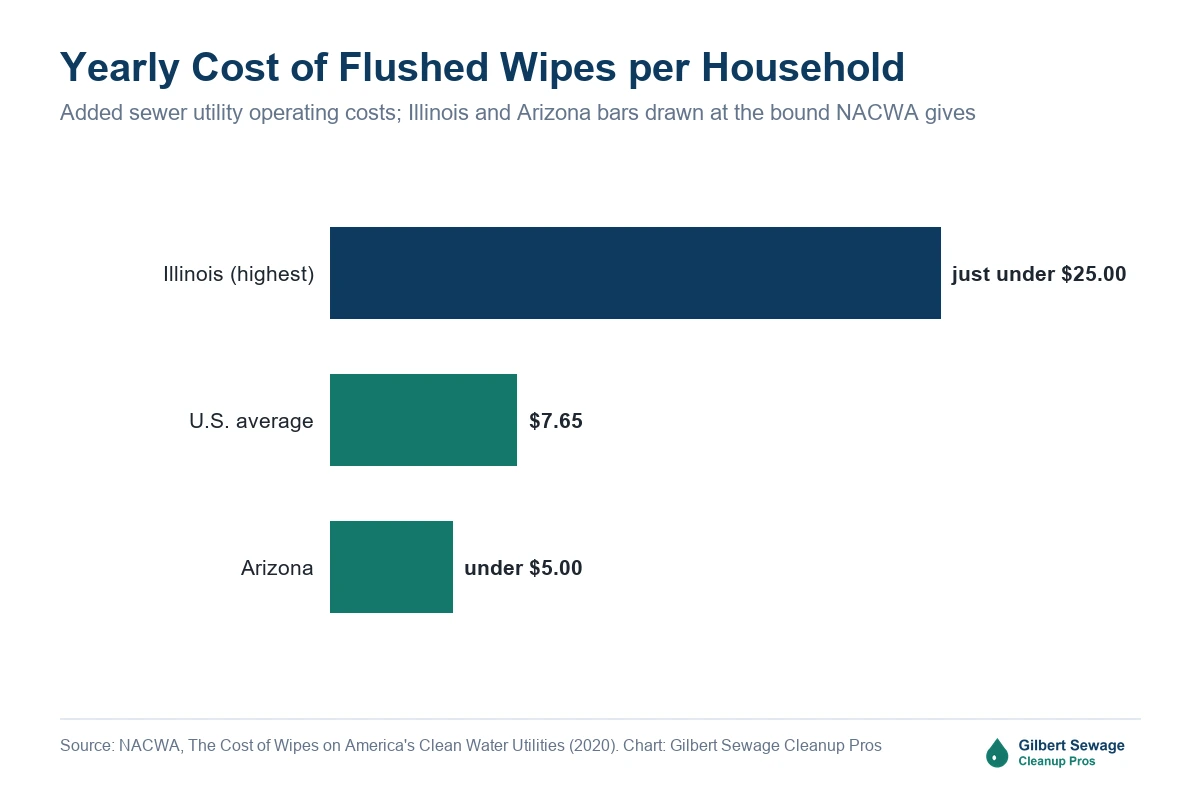
| Average household, per year | $7.65 |
| California total, per year | $47,012,874 |
| Illinois households, per year | Just under $25.00 |
| Arizona households, per year | Under $5.00 |
Source: Gilbert Sewage Cleanup Pros, sewagecleanupgilbert.com/sewer-backup-causes/, data from National Association of Clean Water Agencies, The Cost of Wipes on America's Clean Water Utilities (September 2020).
NACWA calls these estimates conservative, because they count only utility operating costs. Wipes that clog household plumbing or the private line connecting a home to the public sewer were left out. When a wipe clog does back up into a home, cleaning before the line is cleared is the first of the common sewage cleanup mistakes.
What do wipes cost Arizona households?
Arizona households pay under $5.00 a year on average for wipes in the sewer system, among the lowest of any state (National Association of Clean Water Agencies, 2020). The national household average is $7.65, and Illinois households pay just under $25.00.
Why Tree Roots and Grease Block Sewer Lines
Tree roots enter sewer lines through cracks and pipe joints, and grease solidifies as it cools, which is how both block a line (Insurance Information Institute). The 4 blockage sources in the EPA reports and III guidance are:
- Grease that hardens in the drain, the owner's line or the main
- Debris and silt that settle in the pipe
- Wipes and paper products that do not break down quickly
- Roots that grow into cracks and joints and catch waste
A blockage in the public main usually builds slowly, with early signs before a backup (Insurance Information Institute). III also warns against connecting sump pumps or French drains to the sanitary sewer, since debris and silt clog the line. A sewer scope inspection shows roots and buildup inside a private line.
The nation's 500,000-plus miles of sewer lines are on average over 30 years old (American Society of Civil Engineers, as cited by III).
When a Blocked Line Pushes Sewage Into the Home
A blockage anywhere downstream of the house has one exit for the waste behind it: the lowest drain inside. That is how sewage backups through floor drains and toilets start, and the cleanup that follows is a separate job from clearing the line.
Who Clears a Blocked Line in Gilbert?
In Gilbert, the property owner clears a blockage anywhere in the line from the house to the main, including roots, under the town code (Town of Gilbert Code, Sec. 66-251). That line includes the sewer tap where it joins the main.
The guide to who is responsible for a sewage backup covers renters, HOAs and backups that start in the public main.
Where These Numbers Come From
These figures come from the EPA, the National Association of Clean Water Agencies and the Insurance Information Institute, each named next to the number it supports. The 4 sources are:
- EPA ECHO, Sewer Overflow and Bypass Event data under the NPDES Electronic Reporting Rule (current tables, pulled November 3, 2026)
- EPA, Report to Congress on Impacts and Control of Combined Sewer Overflows and Sanitary Sewer Overflows (EPA 833-R-04-001, August 2004)
- NACWA, The Cost of Wipes on America's Clean Water Utilities (September 2020, based on 2019 utility data)
- Insurance Information Institute, Protect your house from sewer backups, including figures it cites from the American Society of Civil Engineers
For the cause shares, we kept the latest version of each reported event, counted sanitary sewer overflows only, and counted an overflow once under each cause it lists. Last updated: November 3, 2026.
Can I use this data?
Yes, you can quote this page's tables and charts with a link to this page as the source. Keep each number's original source name with it.
Frequently Asked Questions About Sewer Backup Causes
What is the most common cause of a sewer backup?
Blockages are the most common cause in the EPA's electronic overflow reports, behind 40.1% of overflows nationally and 46.2% in Arizona (EPA ECHO). Grease is Arizona's most-cited named cause, at 21.6%.
Are flushable wipes really flushable?
Wipes cause damage in sewer systems whether or not they are labeled flushable, according to the National Association of Clean Water Agencies' 2020 study. Rags or wipes were cited in 14.8% of Arizona's reported overflows (EPA ECHO).
Can a sewer backup be caused by rain?
Yes, storm water and groundwater that leak into sewer lines can overload them, the most-cited single cause nationally, in 17.4% of reported overflows. In Arizona, the same cause appears in 3.8% of reported overflows (EPA ECHO).
Are sewer backups becoming more common?
Yes, backed-up sewers are increasing about 3% a year, according to the Civil Engineering Research Foundation as cited by the Insurance Information Institute. No national count of backups is published, so the figure describes a trend.
How old are U.S. sewer lines?
The nation's 500,000-plus miles of sewer lines are on average over 30 years old (American Society of Civil Engineers, as cited by the Insurance Information Institute).